Ademhaling voor diepe slaap: 3 technieken + gratis tool
Onderzocht en geschreven door Still You Redactieteam · Laatst bijgewerkt: 7 mei 2026
3 ademhalingstechnieken afgestemd op jouw slaapprobleem. Malende gedachten, spanning of geen rust — kies jouw patroon en probeer onze gratis ademhalingstool.
Still You Redactieteam
Wellness Onderzoeksteam
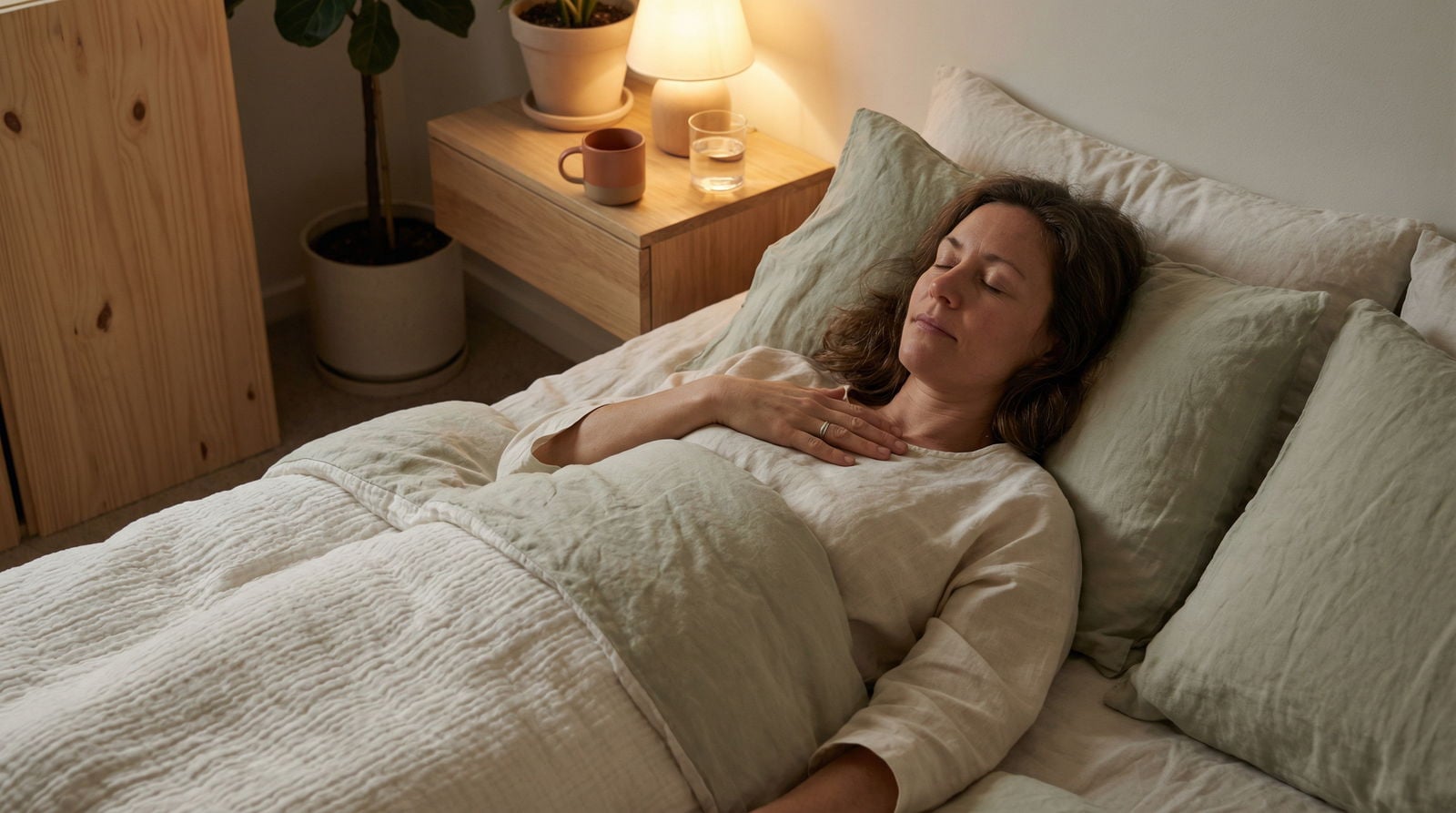
Je lichaam is uitgeput maar je brein wil niet stoppen. De vergaderingen van morgen, dat ding dat je bij de lunch zei, de e-mail die je vergat te versturen. Klinkt bekend? Ademhaling voor diepe slaap werkt omdat het zich richt op het ene waar malende gedachten niet overheen kunnen — je zenuwstelsel.
Die oppervlakkige borstademhaling met 15-18 cycli per minuut? Die houdt je alert. Vertraag naar zes, en je lichaam krijgt het signaal: veilig. Nu slapen.
Gratis 4-7-8 ademhalingstool
Probeer het nu — selecteer je cycli en druk op start. Inademen voor 4, vasthouden voor 7, uitademen voor 8. Auditieve signalen begeleiden elke fase zodat je je ogen kunt sluiten.
Belangrijkste conclusies
- Trage ademhaling bij 6 ademhalingen per minuut activeert je parasympathische zenuwstelsel — je lichaamssignaal "veilig om te slapen"
- De 4-7-8 techniek verbeterde slaapkwaliteitsscores van 13,33 naar 4,93 in klinische onderzoeken
- Diafragmatische ademhaling verlaagt meetbaar het cortisol, het stresshormoon dat je wakker houdt
- Je voelt veranderingen de eerste nacht — een maand oefenen levert de grootste winst op
Waarom je ademhaling de slaapschakelaar regelt
Je zenuwstelsel draait in twee modi: sympathisch (vecht-of-vlucht) en parasympathisch (rust-en-vertering). De meesten van ons zitten de hele dag in sympathische overbelasting — oppervlakkige ademhaling, verhoogde hartslag, cortisol omhoog. Dan gaan we in bed liggen en verwachten dat de schakelaar vanzelf omgaat.
Dat gebeurt niet. Maar je kunt hem handmatig omzetten.
Vertraag naar zes ademhalingen per minuut en je raakt de "resonantiefrequentie" — hartslag, bloeddruk en zenuwstelsel synchroniseren. Je nervus vagus geeft acetylcholine af, hartslag daalt. Onderzoek toont dat dit cortisolniveaus verlaagt zelfs onder stress. Als je bezig bent met hoe je zenuwstelsel te reguleren, is dit hetzelfde mechanisme in actie.
Wat onderzoek aantoont
Een paced breathing studie vond dat 6 ademhalingen per minuut de hartslagvariabiliteit en parasympathische activatie maximaliseert — de fysiologische toestand die je lichaam nodig heeft om in diepe slaap te komen.
3 ademhalingstechnieken voor diepe slaap (kies jouw probleem)
Niet elk slaapprobleem heeft dezelfde oplossing nodig.
Malende gedachten → 4-7-8 ademhaling. Inademen 4 tellen, vasthouden 7, uitademen 8 (maak een "whoosh"). De lange uitademing stimuleert je nervus vagus en vertelt je prefrontale cortex om af te sluiten. Een studie uit 2022 toonde dat het hartslag en bloeddruk significant verlaagde bij zowel slaapgebrek hebbende als uitgeruste deelnemers. Klinische onderzoeken vonden dat het patiënten van slechte naar goede slaap bracht — scores daalden van 13,33 naar 4,93. Als groundingtechnieken helpen bij angst, richt dit zich op dezelfde paden.
Fysieke spanning → diafragmatische ademhaling. Ga plat liggen. Eén hand op buik, één op borst. Inademen door neus (buik stijgt, borst blijft stil), uitademen door mond. Vijf seconden in, vijf uit. Acht weken hiervan verlaagde cortisol significant zelfs onder stresstesten. Buikademhaling, geen borstademhaling — dat is het hele verschil. Als spanning voortkomt uit burn-out, behandelt herstellen van burn-out het volledige herstel van het zenuwstelsel.
Geen rust → box breathing. Inademen 4, vasthouden 4, uitademen 4, vasthouden 4. Herhaal 5 minuten. Onze box breathing tool geeft je een visuele gids zodat je niet hoeft te tellen. Combineert goed met brown noise voor slaap — het geluid maskeert lawaai terwijl je oefent. Als je niet kunt inslapen zelfs als je moe bent, neemt dit patroon net genoeg hersencapaciteit in om afdwalen te stoppen zonder je alert te houden.
Snelle winst
Kun je niet 7 tellen vasthouden? Begin met 4-4-6. De verhouding is belangrijker dan de exacte telling — je wilt een langere uitademing om de nervus vagus te triggeren.
Kies de techniek die past bij vanavond. Sommige nachten heb je de harde reset van 4-7-8 nodig. Andere nachten het langzame uitdoven van box breathing. Probeer onze ademhalingstool en zie welke de schakelaar omzet. Een systematische review vond dat oefening langer dan een maand de meest blijvende verbeteringen opleverde — maar deelnemers voelden veranderingen na de eerste week.
Still You biedt geen medisch advies, diagnose of behandeling. De informatie en tools op deze site zijn uitsluitend bedoeld voor educatieve en zelfregulerende doeleinden en zijn geen vervanging voor professionele zorg.
Bronnen
- Tsai et al., "Paced breathing effects on sleep quality and heart rate variability," PMC, 2015
- 4-7-8 breathing technique effects on heart rate and blood pressure, PMC, 2022
- 4-7-8 breathing for sleep quality in COPD patients, Journal of Respirology Indonesia, 2024
- Diaphragmatic breathing and cortisol reduction, Frontiers in Psychology, 2017
- Systematic review: breathing exercises for sleep quality, PMC, 2024
Veelgestelde vragen
Hoe lang duurt het voordat ademhalingsoefeningen helpen bij slapen?
De meeste mensen voelen zich de eerste nacht al rustiger. Maar onderzoek toont dat de sterkste verbeteringen komen na een maand consequent oefenen. Je zenuwstelsel heeft herhaling nodig om opnieuw te bedraden.
Kan ik ademhalingsoefeningen doen terwijl ik in bed lig?
Ja. Diafragmatische ademhaling werkt eigenlijk beter als je plat ligt. Bij 4-7-8 verkiezen sommigen om in het begin rechtop te zitten om alert genoeg te blijven om te tellen, en dan pas te gaan liggen als de slaap komt.
Wat als ik mijn adem niet 7 tellen kan inhouden?
Begin met 4-4-6 of zelfs 4-3-5. Het belangrijkste is de verlengde uitademing, die de nervus vagus stimuleert. Werk over een paar weken toe naar de volledige 4-7-8 verhouding.
Moet ik door mijn neus of mond ademen?
Inademen door je neus, uitademen door je mond. Neusademhaling filtert en verwarmt de lucht. De hoorbare uitademing door de mond bij 4-7-8 voegt een tactiel element toe dat helpt om je te focussen.
Kunnen ademhalingsoefeningen slaapmedicatie vervangen?
Ze zijn geen vervanging voor medische behandeling. Als je chronische slapeloosheid hebt, praat dan met je arts. Dat gezegd hebbende, trage ademhaling produceert meetbare verlagingen van hartslag en bloeddruk.
Download Still You
Ervaar begeleide ademhalingsoefeningen, slaapverhalen en mindfulness-sessies. Jouw toevluchtsoord voor innerlijke rust.
Onderzocht en geschreven door Still You Redactieteam
Wellness Onderzoeksteam
Ons redactieteam werkt samen aan elk artikel en combineert onderzoek uit peer-reviewed bronnen met inzichten van meditatieleraren en gezondheidsschrijvers.
Ga verder met je reis
Ademhalingsoefeningen voor Boosheid: Kalmeren in 60 Seconden
Leer 3 wetenschappelijk onderbouwde ademhalingstechnieken die boosheid in minder dan 60 seconden onderbreken. De lichaam-eerst benadering voor woede die therapeuten zelden onderwijzen.

Ademhalingstechnieken: Complete gids voor oefeningen
Beheers breathwork met onze complete gids. Leer box-ademhaling, 4-7-8, diafragmatische ademhaling en meer wetenschappelijk onderbouwde technieken.

Box Ademhaling op het Werk: Kalmeer Angst in 90s
Leer box ademhaling te gebruiken op het werk zonder dat iemand het merkt. Praktische technieken om te kalmeren aan je bureau in 90 seconden. Gratis tool inbegrepen.