Brown Noise for Sleep: Why It Works Better for Rest
Researched and Written by Still You Editorial Team · Last updated: May 7, 2026
Can't sleep in silence? Brown noise creates a deep, soothing backdrop that helps you fall asleep faster. Learn why it works and try our free generator.
Still You Editorial Team
Wellness Research Team
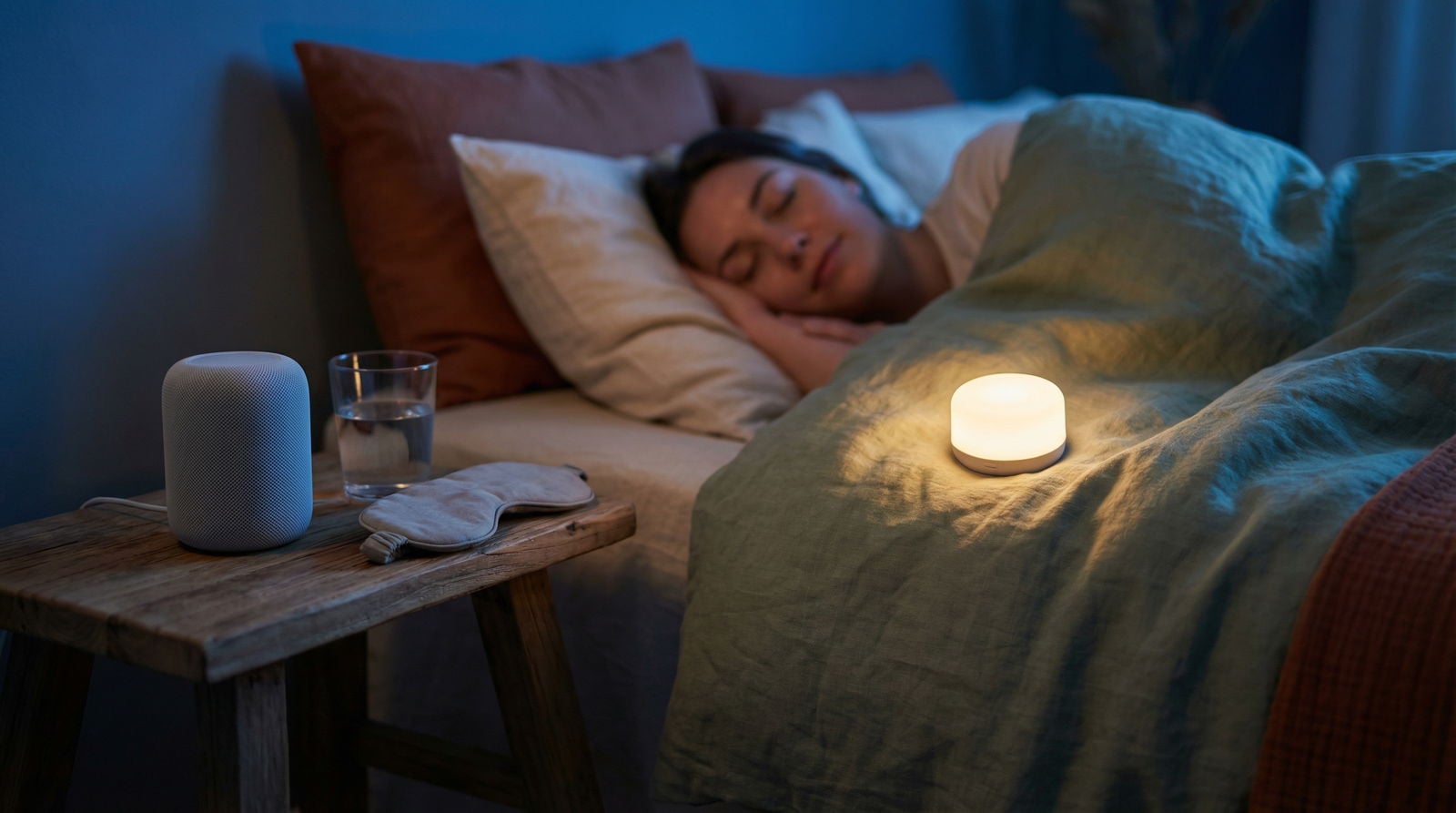
You are lying in bed, exhausted, but your brain will not stop. The silence is not peaceful—it is loud. Every creak of the house, every distant car, every tick of a clock becomes amplified. The quieter it gets, the louder your thoughts become.
If silence keeps you awake, you are not alone. And white noise—that static-like hiss people always recommend—might feel too harsh, too artificial to actually relax into.
Brown noise is different. It is deeper, softer, more like a waterfall or distant thunder. For many people who struggle with silence, it is the missing piece that finally lets their brain settle down.
What Is Brown Noise?
Brown noise is a deep, low-frequency sound—think of rumbling thunder, a strong waterfall, or wind moving through a forest. It is called "brown" not because of color, but after Robert Brown, the scientist who discovered Brownian motion (the random movement of particles).
- White Noise: Equal energy across all frequencies. Sounds like TV static. High-pitched and consistent.
- Pink Noise: Balanced, gentle fade. Sounds like steady rain or wind in leaves. Softer than white noise.
- Brown Noise: Deep low frequencies dominate. Sounds like a waterfall or distant thunder. Warm and rumbling.
The technical difference: brown noise emphasizes lower frequencies more than white or pink noise. Where white noise sounds like TV static (equal energy across all frequencies), brown noise sounds warmer and less harsh—more like a low, steady roar.
"Imagine standing near a large waterfall, or the deep hum of an airplane cabin, or heavy rain on a roof. That low, enveloping rumble—that is brown noise."
Most people describe it as more "natural" and easier to listen to for extended periods than white noise, which can feel sharp or grating over time.
Why Silence Keeps You Awake
The Silence Paradox: Here is something counterintuitive: for some people, silence is actually stimulating, not relaxing.
When your environment is completely quiet, your brain does not just rest—it starts scanning for sounds. This is an evolutionary survival mechanism. In true silence, even tiny noises stand out dramatically, triggering small alertness responses.
Science
According to research on broadband sound and sleep, consistent background noise can reduce sleep onset latency by masking sudden environmental sounds. A door closing at 30 decibels is more likely to wake you than constant traffic at 50 decibels.
This is where brown noise helps:
- Masks Sudden Noises: That door closing blends into the background instead of jolting you awake.
- Stops Brain Scanning: Gives your brain something steady to process, ending threat detection mode.
- Fills The Void: For people who find quiet anxiety-inducing, it creates acoustic comfort.
Think of it as acoustic darkness. Just as blackout curtains remove visual stimulation, brown noise removes auditory gaps that keep your brain alert.
The Science: How Brown Noise Helps Sleep
Brown noise may support sleep through several mechanisms:
- Sound Masking: The primary effect is simple: brown noise covers up disruptive sounds. Its low-frequency emphasis is particularly effective at masking common sleep disturbances like traffic, voices, and household sounds. Research published in the Journal of Clinical Sleep Medicine suggests that auditory stimulation can improve sleep outcomes, with pink noise showing particularly promising results across multiple studies.
- Reduced Auditory Processing: When sound is constant and predictable, your brain learns to tune it out—a process called habituation. This means less activation in the parts of your brain responsible for monitoring your environment, which may allow deeper relaxation.
- Psychological Comfort: For many people, brown noise feels inherently calming. Its resemblance to natural sounds (rain, waterfalls, wind) may trigger relaxation responses that pure white noise does not. While research on this specific effect is limited, anecdotal reports consistently describe brown noise as easier and more comfortable than higher-frequency alternatives.
Important Note
Brown noise is not a cure for clinical insomnia or sleep disorders. If you have persistent sleep problems, please consult a healthcare provider. Brown noise may help with environmental factors, but it will not address underlying medical issues.
Brown Noise vs White Noise vs Pink Noise
The "color" of noise refers to its frequency distribution. Here is how they compare:
| Noise Type | Sound Character | Best For |
|---|---|---|
| White Noise | Hissy, static-like (TV snow) | Blocking sharp, high-pitched sounds |
| Pink Noise | Softer, balanced (steady rain) | Light sleepers, staying asleep |
| Brown Noise | Deep, rumbly (waterfall, thunder) | Falling asleep, silence-sensitive people |
Choose Brown Noise If...
- You find white noise harsh or irritating
- You struggle specifically with falling asleep
- You dislike silence or find it anxiety-provoking
- You are sensitive to high-frequency sounds
- You want something that feels more natural
Choose Pink Noise If...
- Your problem is staying asleep rather than falling asleep
- You have tinnitus (covers mid-range frequencies)
- You prefer a more balanced sound
- Some research suggests it may support deeper sleep stages
The good news: there is no wrong choice. Try both and notice which one your body responds to better.
How to Use Brown Noise for Sleep
Getting the most from brown noise is not complicated, but a few details matter:
- Volume Level: Lower than you think. The goal is background sound, not foreground. You should be able to have a normal conversation over it. A good rule: set the volume where you can barely notice it, then raise it just slightly. If it feels loud, it is too loud.
- Speaker vs. Headphones: Speakers are safer for sleep. Wearing headphones or earbuds all night can cause ear discomfort, wax buildup, or even ear infections with prolonged use. A small speaker on your nightstand works well. If you share a bed with someone who does not want noise, consider a pillow speaker.
- Duration: All night is fine for most people. Unlike some sleep interventions, there is no evidence that continuous brown noise is harmful. Some people prefer to set a timer (30-60 minutes) that turns off after they fall asleep. Others keep it running all night to prevent early-morning awakenings.
- Consistency: Use the same brown noise source each night. Your brain will start associating that specific sound with sleep, strengthening the effect over time. This is why using the same brown noise tool regularly is more effective than switching between different apps or sounds.
- Combine with Good Sleep Timing: Brown noise helps with the environment for sleep, but timing matters too. Use the sleep calculator to find the best times to go to bed based on your wake-up time and natural sleep cycles.
When Brown Noise Will Not Help
Brown noise is not magic. It may not help in certain situations:
- Internal Problems: If racing thoughts, anxiety, or stress are keeping you awake, sound masking alone will not solve it. Brown noise can reduce environmental triggers, but it does not quiet a busy mind.
- Clinical Sleep Disorders: Conditions like sleep apnea, restless leg syndrome, or chronic insomnia require medical treatment. Brown noise is a tool for environmental optimization, not a medical intervention.
- You Prefer Silence: Some people genuinely sleep better in quiet. If you have tried brown noise for a week and it is not helping—or worse, it is keeping you awake—trust your experience.
- Sound Sensitivity: If brown noise feels annoying or wrong, it probably will not help you sleep. Our sounds library includes other options worth exploring.
Start Tonight
If silence has been your enemy at bedtime, brown noise might be the simple change that finally helps. It will not fix everything, but it can remove one major barrier between you and sleep.
Put it on low, close your eyes, and let that deep, steady rumble fill the silence.
Brown Noise
Deep, rumbling frequencies for ADHD focus and deep sleep.
Related Tool
Use the Sleep Calculator to find your optimal bedtime based on 90-minute sleep cycles—pair it with brown noise for the best results.
Sources
- Messineo, L., et al. (2017). Broadband Sound Administration Improves Sleep Onset Latency in Healthy Subjects in a Model of Transient Insomnia. Frontiers in Neurology.
- Riedy, S.M., et al. (2021). Noise as a Sleep Aid: A Systematic Review. Sleep Medicine Reviews.
- Cho, M.Y., et al. (2022). Systematic Review: Auditory Stimulation and Sleep. Journal of Clinical Sleep Medicine.
- National Institute on Deafness and Other Communication Disorders. How Do We Hear?. NIH.
Frequently Asked Questions
Is brown noise or white noise better for sleep?
For most people, brown noise is easier to sleep with because it's lower-pitched and less harsh. White noise has more high-frequency content that some find irritating, especially over long periods. However, individual preference matters.
Why does brown noise help you sleep?
Brown noise helps primarily through sound masking—it creates a consistent audio backdrop that covers sudden noises that might otherwise wake you. It also gives your brain something predictable to process, reducing alertness.
Is it OK to sleep with brown noise all night?
Yes, for most people. There's no evidence that continuous low-level brown noise is harmful to sleep or hearing, provided the volume is reasonable (conversational level or below).
What's the difference between brown, white, and pink noise?
White noise sounds like TV static with equal energy across all frequencies. Pink noise is softer and balanced like steady rain. Brown noise is the deepest, with a low rumble like a waterfall or thunder—most people find it the most natural and comfortable for sleep.
Can brown noise help with anxiety at night?
Brown noise can help reduce environmental triggers that worsen nighttime anxiety by creating a consistent sound that fills uncomfortable silence. However, for anxiety-driven sleeplessness, combining it with breathing exercises may be more effective.
Download Still You
Experience guided breathwork, sleep stories, and mindfulness sessions. Your sanctuary for inner peace.
Researched and Written by Still You Editorial Team
Wellness Research Team
Our editorial team collaborates on every article, combining research from peer-reviewed sources with insights from meditation teachers and health writers.
Continue Your Journey
How to Fall to Sleep Instantly: 4 Techniques That Work
No one falls asleep instantly. But 2-5 minutes? That's real. Four evidence-based techniques to quiet your brain and body tonight.
Laying in Bed for Hours Can't Sleep? Break the Cycle
Stop the anxiety spiral of laying in bed for hours and can't sleep. Learn the exact 20-minute reset protocol backed by sleep restriction science and CBT-I.

Benefits of Sleeping on the Floor: Science & Practice
Floor sleeping affects your nervous system, spine alignment, and sleep architecture. Here's what the research actually shows—plus a 7-day adaptation protocol.