Meditação Diária: Guia para uma Prática que Realmente Dura
Pesquisado e escrito por Equipe Editorial Still You · Última atualização: 8 de fevereiro de 2026
Construa uma prática de meditação diária com métodos baseados em ciência. De sessões de 5 minutos para iniciantes até práticas avançadas, mais um programa de reset de 7 dias.
Equipe Editorial Still You
Equipe de Pesquisa em Bem-estar
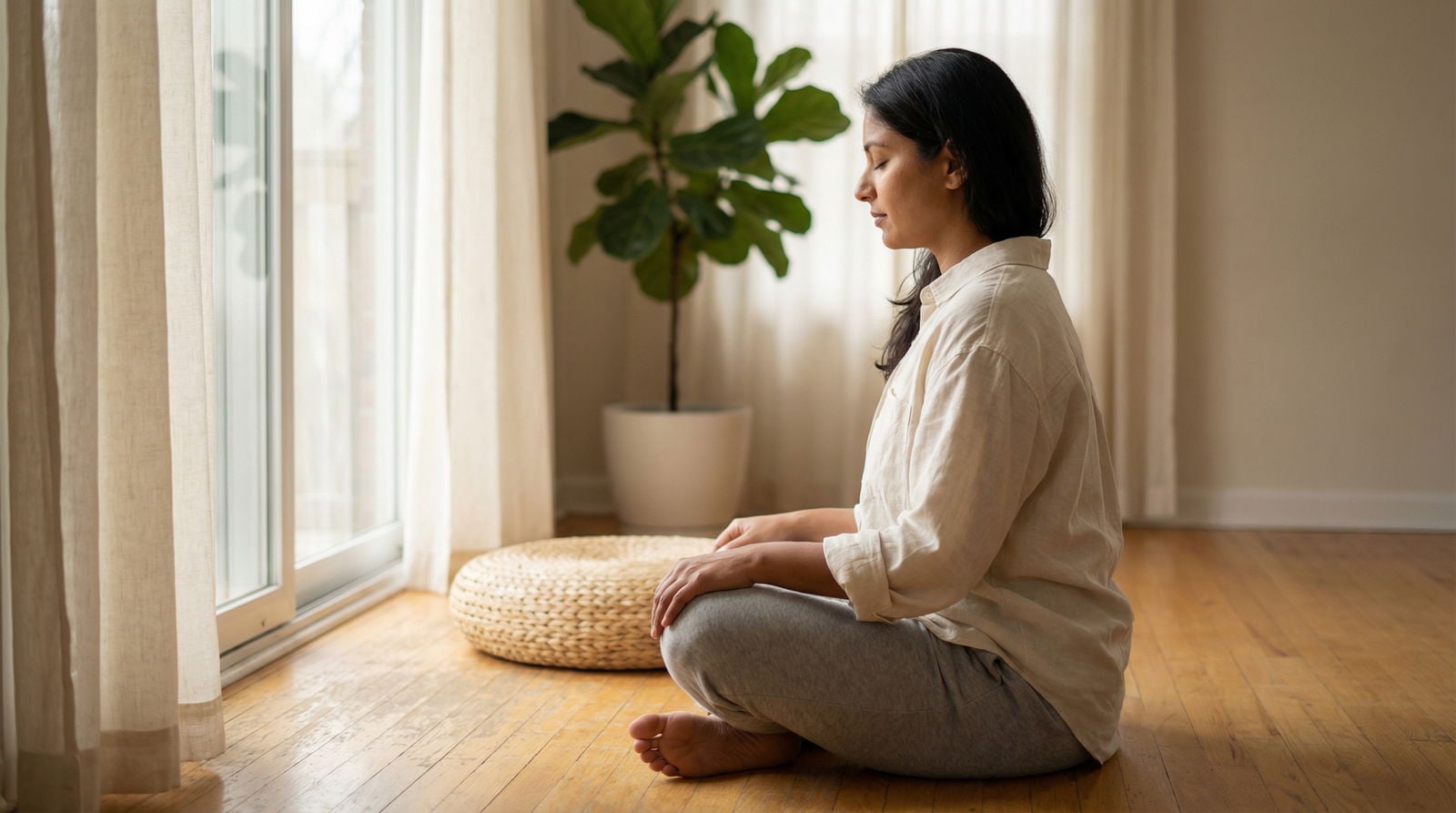
Meditação diária: o guia completo para uma prática duradoura
Sentei para meditar esta manhã e imediatamente pensei no email que esqueci de enviar. Depois na consulta no dentista que preciso marcar. Depois se deixei o fogão ligado. Depois se pensar no fogão contava como meditação ou se precisava recomeçar. Depois fiquei pensando se outras pessoas também pensam em fogões durante a meditação, o que me levou a questionar se estou fazendo tudo errado.
Esse foi o dia 847 de prática diária.
O que ninguém conta sobre a meditação diária: ela não fica mais fácil. Sua mente não fica subitamente calma. Você não alcança iluminação nem transcende sua humanidade. O que muda é sua relação com o caos. O dia 847 parece diferente do dia 1 não porque meus pensamentos ficaram mais silenciosos, mas porque parei de esperar que ficassem.
A pesquisa sobre meditação diária é avassaladora. Estudos mostram que ela reconfigura o cérebro, reduz a ansiedade tão eficazmente quanto medicação, aumenta a densidade de massa cinzenta em regiões responsáveis pela aprendizagem e memória, e altera fundamentalmente como o sistema nervoso responde ao estresse. Mas essas descobertas perdem a história real: o efeito cumulativo de aparecer quando você não quer, sentar quando sua mente grita para checar o celular, e escolher presença em vez de produtividade milhares de vezes até que isso se torne quem você é.
Este guia cobre tudo o que aprendemos com a ciência e com nossa própria prática inconsistente e imperfeita. Você vai entender o que acontece no cérebro durante a meditação diária, como construir uma prática que realmente se sustente (não o ritual matinal aspiracional de 60 minutos que dura três dias), e o que fazer quando parece que a meditação não está funcionando. Incluímos cinco estruturas práticas de 5 a 30 minutos, um programa estruturado de reset de 7 dias, e respostas honestas aos obstáculos que descarrilam a maioria das pessoas no primeiro mês.
Não se trata de se tornar o tipo de pessoa que medita. Trata-se do que acontece quando você se senta todo dia e respira.
O que acontece no cérebro quando você medita diariamente
Seu cérebro é plástico. Não metaforicamente -- literalmente. Neurocientistas chamam de neuroplasticidade: a capacidade do cérebro de se reorganizar formando novas conexões neurais ao longo da vida. A meditação diária é uma das formas mais poderosas de aproveitar essa plasticidade, e agora podemos medir exatamente como ela remodela a estrutura cerebral.
Um estudo marco de 2011 da Harvard Medical School acompanhou 16 participantes sem experiência em meditação ao longo de um programa de oito semanas de redução de estresse baseado em atenção plena (mindfulness). Quem participou praticou em média 27 minutos por dia -- não horas, não retiros monásticos, apenas 27 minutos. Ressonâncias magnéticas antes e depois mostraram aumento da densidade de massa cinzenta em quatro regiões-chave: o hipocampo esquerdo (crítico para aprendizagem e memória), o córtex cingulado posterior (envolvido no pensamento autorreferencial), a junção temporo-parietal (associada à empatia e compaixão) e o cerebelo (que regula emoções).
O grupo controle, que não meditou, não apresentou mudanças.
Aqui fica interessante: a redução do estresse correlacionou com diminuição da densidade de massa cinzenta na amígdala. Essa é a central de medo do cérebro, a parte que grita "perigo!" quando você recebe uma mensagem ambígua do chefe ou acorda às 3h da manhã com pensamentos acelerados. A meditação diária não apenas adicionou algo ao cérebro de quem participou -- subtraiu a resposta hiperativa ao estresse que faz a vida moderna parecer uma emergência constante.
Penso nesse estudo toda vez que percebo minha amígdala disparando. Ainda acontece. Ainda sinto aquela sensação de aperto no peito e frio no estômago quando algo dá errado. Mas agora existe um espaço entre a sensação e minha reação a ela. Um pequeno intervalo onde posso pensar: "Isso é só minha amígdala. Ela está fazendo seu trabalho. Não preciso obedecer."
Esse espaço é neuroplasticidade em ação.
A rede de modo padrão: por que sua mente divaga
Conhece aquela voz na sua cabeça que narra sua vida? A que repassa conversas de três anos atrás, planeja discussões imaginárias e constantemente avalia se você está fazendo o suficiente, sendo o suficiente, alcançando o suficiente? Essa é sua rede de modo padrão (DMN).
A DMN inclui o córtex pré-frontal medial, o córtex cingulado posterior e o precuneus -- regiões cerebrais que se ativam quando você não está focando no mundo externo. Ela é responsável pelo pensamento autorreferencial, memória autobiográfica e planejamento futuro. Também é hiperativa na depressão, ansiedade e TDAH.
Uma meta-análise de 2015 sobre neuroimagem da meditação descobriu que a meditação suprime consistentemente a atividade da DMN. Quem pratica há mais tempo mostrou atividade significativamente menor no córtex cingulado posterior e precuneus durante a meditação em comparação com controles. Quanto mais tempo a pessoa praticava, mais pronunciada era a supressão.
Isso explica por que a meditação parece tão difícil no início. Sua DMN está acostumada a comandar o show. Quando você se senta e tenta focar na respiração, a DMN se rebela. Ela lança cada pensamento, preocupação e distração para retomar o controle. "Isso é chato. Eu devia estar fazendo algo produtivo. Tranquei a porta? O que tem para jantar? Sou péssimo em meditação."
A prática diária não silencia a DMN. Ela treina você a perceber quando a rede está ativada e gentilmente retornar a atenção ao momento presente. Vezes e vezes. Milhares de vezes. Até que o padrão de perceber e retornar se torne automático.
Ondas gama e sincronia neural
Quem pratica há muito tempo -- estamos falando de monges tibetanos com mais de 10.000 horas de prática -- mostra algo notável durante a meditação: oscilações gama de alta amplitude que não aparecem em quem está começando ou em grupos controle.
Ondas gama (25-42 Hz) são as ondas cerebrais mais rápidas, associadas à atenção, aprendizagem, percepção consciente e integração de informações entre diferentes regiões cerebrais. Em um estudo de 2004 de Richard Davidson e colegas, "o padrão topográfico da atividade gama emergiu bilateralmente sobre locais de eletrodos parieto-temporais e médio-frontais, regiões implicadas na atenção e no processamento autorreferencial."
O mais impressionante: a atividade gama aumentou monotonicamente durante a meditação e permaneceu elevada depois. Esses monges alteraram fundamentalmente o funcionamento basal de seus cérebros.
Você não vai gerar ondas gama de nível monástico com 20 minutos de prática diária. Mas o princípio se mantém: a meditação melhora a sincronia neural. Ela treina diferentes regiões cerebrais a se comunicarem de forma mais eficiente. Pense nisso como uma atualização do sistema operacional do seu cérebro por meio da prática repetitiva.
A amígdala fica mais silenciosa (mas não fica silente)
Um estudo de 2019 sobre reatividade da amígdala descobriu que quem pratica há mais tempo apresentou ativação significativamente menor na amígdala direita em resposta a imagens positivas. As horas totais de prática de meditação ao longo da vida correlacionaram com menor reatividade da amígdala a estímulos negativos -- uma clara relação dose-resposta.
O treinamento de atenção plena de curto prazo (oito semanas) aumentou a conectividade funcional entre a amígdala e o córtex pré-frontal ventromedial, região envolvida na regulação emocional. O cérebro estava literalmente construindo circuitos mais fortes para gerenciar respostas emocionais.
Gostaria de dizer que a meditação diária desliga a resposta de medo. Não desliga. Ainda sinto ansiedade. Mas a qualidade da ansiedade mudou. Ela é menos grudenta. Menos totalizante. Chega como uma sensação no peito em vez de uma narrativa sobre tudo que está errado na minha vida. E passa mais rápido.
É isso que essas mudanças cerebrais parecem por dentro.
A ciência: por que a prática diária supera sessões ocasionais
Você não consegue meditar uma vez e reconfigurar o cérebro. Não é possível fazer um retiro de meditação uma vez por ano e esperar mudanças duradouras. A pesquisa é inequívoca: consistência importa mais que duração.
Um ensaio randomizado de 2023 comparou 10 minutos de meditação diária com 30 minutos diários (tanto práticas sentadas quanto baseadas em movimento) ao longo de duas semanas. Pesquisadores encontraram um efeito significativo do tempo sobre o bem-estar mental (F=46,7, p < 0,001), significando que ambos os grupos melhoraram simplesmente por praticar diariamente. Mas não houve diferença significativa entre os grupos de 10 e 30 minutos.
Leia de novo: 10 minutos funcionaram tão bem quanto 30 minutos.
O detalhe? Aderência. Foi pedido que quem participou praticasse por 14 dias consecutivos. Em média, meditaram 7 a 8 dias. A meditação com movimento teve taxa de desistência de 60,9%, comparada a 42,5% para meditação sentada. As pessoas não conseguiam sustentar a prática nem por duas semanas.
Esse é o paradoxo central da meditação: funciona se você praticar diariamente, mas a prática diária é brutalmente difícil de manter. Os benefícios são cumulativos, mas a mente moderna se rebela contra fazer qualquer coisa sem resultados imediatos.
Meditação vs. medicação: o estudo TAME
Um dos estudos mais rigorosos sobre meditação comparou oito semanas de MBSR (redução de estresse baseada em atenção plena) com escitalopram (Lexapro) para tratar transtornos de ansiedade. Não foi um pequeno estudo piloto -- incluiu 276 participantes diagnosticados com transtorno de ansiedade generalizada, transtorno de ansiedade social, transtorno do pânico ou agorafobia.
Os resultados: MBSR não foi inferior ao escitalopram. Ambos os grupos mostraram reduções semelhantes na gravidade da ansiedade (1,35 pontos na escala CGI-S para MBSR vs. 1,43 para escitalopram). A diferença foi de -0,07 pontos com intervalo de confiança de 95% de -0,38 a 0,23 -- estatisticamente, performaram igual.
Mas o perfil de efeitos colaterais foi dramaticamente diferente. 78,6% de quem usou escitalopram relatou eventos adversos comparados a 15,4% no grupo MBSR. 8% do grupo de medicação desistiram por eventos adversos. Zero porcento do grupo de meditação desistiu por eventos adversos.
Pense nisso. A meditação diária igualou uma intervenção farmacêutica de primeira linha para transtornos de ansiedade sem a disfunção sexual, ganho de peso, insônia ou sintomas de abstinência que acompanham os ISRSs.
Isso não significa que a meditação substitui a medicação. Algumas pessoas precisam de ambas. Algumas precisam de medicação sozinha. Mas significa que a prática diária tem efeitos mensuráveis e clinicamente significativos nos resultados de saúde mental que rivalizam com tratamentos farmacológicos.
A mudança bioquímica: hormônios e neurotransmissores
Seu cérebro não muda apenas estruturalmente durante a meditação diária -- muda bioquimicamente.
Um estudo de 2025 sobre meditação heartfulness mediu os níveis de ocitocina, beta-endorfinas e cortisol de quem participou antes e depois de 30 dias de prática. Os resultados mostraram aumentos significativos em ocitocina (+88,18 pg/mL, p=0,003) e beta-endorfinas (+94,83 pg/mL, p=0,003), enquanto o cortisol diminuiu (-133,55 nmol/L, p < 0,001).
A ocitocina é às vezes chamada de "hormônio do vínculo" -- liberada durante o toque físico, conexão social e momentos de confiança. As beta-endorfinas são os analgésicos naturais do corpo, associadas ao bem-estar emocional e ao "barato da corrida". O cortisol é o hormônio do estresse, elevado durante estresse crônico e associado à inflamação, ganho de peso e supressão imunológica.
A meditação diária essencialmente recalibra seu sistema de resposta ao estresse no nível químico. Você não está apenas pensando diferente -- está produzindo hormônios diferentes.
Por que "de vez em quando" não funciona
O cérebro precisa de repetição para formar novas vias neurais. Uma sessão de meditação ativa certas regiões cerebrais e suprime outras, mas os efeitos se dissipam em horas. A prática diária transforma essas mudanças temporárias em alterações estruturais e funcionais duradouras.
É como musculação. Você não pode levantar pesos uma vez e esperar crescimento muscular. Você precisa de sobrecarga progressiva, consistência e tempo para adaptação. Seu cérebro opera pelo mesmo princípio.
A pesquisa sugere uma dose mínima eficaz: 20 a 30 minutos diários por oito semanas para ver mudanças mensuráveis na estrutura cerebral. Mas mesmo sessões mais curtas (10 a 15 minutos) mostram benefícios se praticadas consistentemente.
A palavra-chave é consistentemente. Não perfeitamente. Não com foco impecável. Apenas aparecer, sentar e respirar. Todo dia.
Como começar: seus primeiros 30 dias de meditação diária
A maioria dos conselhos sobre meditação é inútil. "Encontre um lugar tranquilo." "Sente confortavelmente." "Esvazie a mente." Ótimo. E quando você não tem lugar tranquilo, suas costas doem após três minutos, e sua mente produz 47 pensamentos por segundo?
Veja o que realmente funciona para construir uma prática diária no primeiro mês:
Semana 1: sessões ridiculamente curtas
Comece com cinco minutos. Não 20. Nem 10. Cinco minutos é curto o suficiente para não conseguir se convencer do contrário e longo o suficiente para experimentar o desafio central da meditação: ficar parado enquanto sua mente enlouquece.
Coloque um temporizador. Sente em qualquer posição que não cause dor. Feche os olhos ou suavize o olhar. Perceba sua respiração sem tentar controlá-la. Quando sua mente divagar (vai divagar em 10 segundos), perceba que divagou e retorne a atenção à respiração.
É isso. Essa é toda a prática.
Você vai pensar em listas de compras, prazos de trabalho, momentos constrangedores do colégio, e se está "fazendo certo". Isso não é fracasso. Isso é meditação. A prática não é parar pensamentos -- é perceber quando você se perdeu em pensamentos e voltar.
Faça isso todo dia por sete dias. Mesmo horário se possível (manhãs funcionam melhor para a maioria porque o dia ainda não encheu sua cabeça de ruído). Não julgue a qualidade das sessões. Não monitore o quão "calmo" se sente. Apenas sente por cinco minutos e respire.
Semana 2: adicione um minuto por dia
Se cinco minutos pareceu sustentável, adicione um minuto. Agora você medita seis minutos diários. Se cinco minutos pareceu tortura, fique nos cinco minutos por mais uma semana.
É aqui que a maioria comete um erro fatal: fica ambiciosa. Pensa "fiz cinco minutos com sucesso, então devia pular para 20 minutos como quem medita de verdade." Aí perde um dia. Depois dois. Depois abandonou a prática completamente.
Resista a essa urgência. Progresso incremental é o único tipo que se sustenta.
Ao fim da semana dois, você deve estar em 6 a 7 minutos por sessão. Você já meditou 13 a 14 vezes. Seu cérebro começou a reconhecer isso como um padrão, mesmo que ainda proteste toda manhã.
Semana 3: introduza uma técnica
Nas duas primeiras semanas, você focou na consciência da respiração -- o alicerce de toda prática de meditação. Agora adicione uma técnica simples para dar algo à sua mente fazer.
Tente contagem de respirações: inspire (conte 1), expire (conte 2), inspire (conte 3), expire (conte 4), até 10, depois recomece. Quando perder a conta (você vai perder), recomece do 1.
Ou tente rotulação: nomeie silenciosamente o que está acontecendo. "Pensando." "Planejando." "Preocupando." "Ouvindo." "Sentindo." Isso cria distância entre você e seu conteúdo mental. Você não é seus pensamentos -- você é a consciência que percebe pensamentos.
Ou tente respiração quadrada se quiser algo mais estruturado: inspire por 4 tempos, segure por 4, expire por 4, segure por 4, repita.
A técnica importa menos que ter uma. Ela dá à sua mente uma tarefa, o que reduz a sensação de que meditar é apenas sentar lá sem fazer nada.
Semana 4: o primeiro teste real
Na semana quatro, a novidade acabou. Você não sente mais empolgação com a meditação. Algumas sessões parecem inúteis. Você perdeu um ou dois dias (talvez três). Essa é a zona de abandono.
Eis o que fazer: baixe a barra. Se você meditava 10 minutos, volte para 5. Se sentava ereto, deite. Se meditava de manhã, troque para a noite. O objetivo é preservar o hábito diário, mesmo que signifique comprometer duração ou "qualidade."
Um minuto conta. Trinta segundos contam. Sentar no banheiro e tomar três respirações conscientes conta.
A pesquisa sobre formação de hábitos mostra que consistência supera intensidade. Pessoas que praticaram diariamente (mesmo por pouco tempo) mostraram aderência significativamente melhor a longo prazo do que quem praticava sessões mais longas com menos frequência.
Seu cérebro está aprendendo: "Isso é algo que faço todo dia." Essa é a única lição que importa no primeiro mês.
O setup que realmente ajuda
Esqueça velas, almofadas e aplicativos de meditação (a menos que realmente ajudem você). Foque nestes elementos práticos:
Mesmo horário, mesmo lugar: seu cérebro ama consistência. Medite no mesmo lugar, no mesmo horário, todo dia. Isso cria uma pista contextual que aciona o hábito.
Imediatamente após um hábito existente: encaixe a meditação em algo que você já faz todo dia. Após o café da manhã. Antes de checar o email. Logo após escovar os dentes. O hábito existente vira o gatilho para o novo.
Lembrete visível: coloque sua almofada de meditação (ou cadeira, ou tapete) em algum lugar que você veja. Objetos físicos no ambiente estimulam comportamentos melhor que lembretes mentais.
Sem celular: desligue o celular ou deixe em outro cômodo. Meditação não exige ambientes sem distração, mas você não precisa dificultar tendo o Instagram a dez centímetros do seu rosto.
Baixe seus padrões: uma sessão "ruim" em que você passou nove minutos pensando no almoço ainda é uma sessão bem-sucedida porque você sentou e tentou. O padrão de sucesso é aparecer, não alcançar iluminação.
5 estruturas de meditação diária (de 5 a 30 minutos)
Dias diferentes pedem abordagens diferentes. Algumas manhãs você tem cinco minutos antes das crianças acordarem. Algumas noites você tem espaço para uma prática mais longa. Aqui estão cinco estruturas que você pode alternar baseado no tempo, energia e no que precisa.
Estrutura 1: A âncora de 5 minutos (consciência da respiração)
Duração: 5 minutos Melhor para: iniciantes, manhãs corridas, manter o hábito diário
Essa é sua prática de base -- aquela à que você retorna quando todo o resto parece demais.
- Sente em posição confortável (cadeira, almofada, chão, cama -- tanto faz)
- Coloque um temporizador de 5 minutos
- Feche os olhos ou suavize o olhar
- Perceba a sensação física de respirar (ar entrando nas narinas, peito subindo, barriga expandindo)
- Quando a mente divagar, perceba que divagou e retorne a atenção à respiração
- Repita aproximadamente 200 vezes
É só isso. Sem padrão de respiração especial. Sem visualização. Apenas consciência da respiração.
A respiração é uma "âncora" porque está sempre disponível. Você não pode esquecer de trazer sua respiração para a meditação. Ela dá à atenção um lugar para descansar quando a mente dispara.
Estrutura 2: O escaneamento corporal de 10 minutos
Duração: 10 minutos Melhor para: tensão física, ansiedade, desconexão do corpo
Essa prática move a atenção sistematicamente pelo corpo, percebendo sensações sem tentar mudá-las.
- Deite ou sente com apoio nas costas
- Coloque um temporizador de 10 minutos
- Leve a atenção ao topo da cabeça. Perceba qualquer sensação (formigamento, pressão, calor, nada)
- Mova a atenção lentamente para baixo: testa, olhos, mandíbula, pescoço, ombros, braços, mãos, peito, barriga, quadris, pernas, pés
- Gaste cerca de 30 segundos em cada área
- Quando a mente divagar, perceba para onde a atenção foi e retorne à parte do corpo que estava escaneando
- No final, faça três respirações profundas e perceba todo o corpo de uma vez
O escaneamento corporal ensina você a habitar sua forma física. A maioria vive na cabeça o dia inteiro -- essa prática te traz de volta ao corpo. É particularmente útil antes de dormir (embora você possa adormecer, o que é normal).
Para um mergulho mais profundo nas práticas de consciência corporal, veja nosso guia sobre postura de meditação que aborda como sentar confortavelmente para sessões mais longas.
Estrutura 3: A prática de bondade amorosa de 15 minutos
Duração: 15 minutos Melhor para: emoções difíceis, conflito interpessoal, autocrítica
A meditação de bondade amorosa (metta) gera sentimentos de calor e compaixão por você e pelos outros. Um estudo de 2025 sobre meditação cognitiva combinada com bondade amorosa para TEPT mostrou tamanhos de efeito massivos: d de Cohen = -1,09 para sintomas de TEPT, d = -2,85 para culpa, d = -2,14 para vergonha. 93,8% de quem participou mostrou melhorias confiáveis.
- Sente confortavelmente e feche os olhos
- Coloque um temporizador de 15 minutos
- Para você (5 minutos): repita silenciosamente estas frases: "Que eu esteja em segurança. Que eu tenha saúde. Que eu tenha felicidade. Que eu viva com tranquilidade." Perceba qualquer resistência que surgir. Continue repetindo.
- Para alguém que você ama (3 minutos): traga alguém à mente. Repita: "Que você esteja em segurança. Que você tenha saúde. Que você tenha felicidade. Que você viva com tranquilidade."
- Para alguém neutro (3 minutos): pense em alguém que você mal conhece (o barista, o carteiro). Repita as frases para essa pessoa.
- Para alguém difícil (3 minutos): isso é avançado. Se parecer difícil demais, pule. Traga à mente alguém com quem você tem conflito. Repita as frases.
- Para todos os seres (1 minuto): expanda as frases para incluir todos: "Que todos os seres estejam em segurança, tenham saúde, felicidade e vivam com tranquilidade."
Essa prática parece estranha no início. Você pode não sentir nada. Tudo bem. Você está treinando seu cérebro para gerar compaixão, não se forçando a sentir de determinada forma. As mudanças neurais acontecem independentemente de você "sentir" ou não.
Estrutura 4: A prática de rotulação de 20 minutos
Duração: 20 minutos Melhor para: pensamentos acelerados, ansiedade, entender os padrões da mente
Rotulação é uma técnica da tradição Vipassana de Mahasi Sayadaw. Você nomeia o que surge na consciência sem se envolver com o conteúdo.
- Sente ereto (essa prática exige estado de alerta)
- Coloque um temporizador de 20 minutos
- Feche os olhos e observe sua respiração por 2 a 3 minutos para se acomodar
- Depois expanda a consciência para incluir tudo: pensamentos, sensações, sons, emoções
- Quando algo surgir, rotule silenciosamente: "Pensando." "Ouvindo." "Coçando." "Planejando." "Preocupando." "Sentindo."
- Rotule rápida e levemente -- não analise
- Se nada estiver óbvio, rotule "respirando" ou "sentando"
- Quando a mente se perder numa história mental, rotule "pensando" e retorne à consciência aberta
A rotulação cria espaço entre você e sua experiência. Em vez de ser arrastado por uma preocupação, você percebe: "Ah, preocupação está acontecendo." Essa leve mudança de perspectiva é o início da liberdade.
A prática fica mais rápida e leve com o tempo. Eventualmente, você rotula tão rapidamente que pega pensamentos no momento em que surgem, antes que se transformem em narrativas completas.
Estrutura 5: A prática de consciência aberta de 30 minutos
Duração: 30 minutos Melhor para: quem pratica há mais tempo, prática profunda, fins de semana
Essa é a prática para a qual você vai construindo. Ela requer estabilidade de atenção e conforto com o tédio.
- Sente numa posição que possa manter por 30 minutos (veja nosso guia de postura de meditação para dicas)
- Coloque um temporizador
- Comece com 5 minutos de consciência da respiração para estabilizar a atenção
- Depois solte a respiração como âncora e abra a consciência para tudo
- Não foque em nada específico. Descanse em consciência aberta, sem escolha
- O que surgir (pensamentos, sons, sensações, emoções) -- deixe surgir e passar sem se envolver
- Você não está fazendo nada. Você está consciente de estar consciente.
- Quando perceber que se perdeu em pensamentos, simplesmente retorne à consciência aberta
Essa é a prática mais difícil porque não há técnica para se agarrar. Você não está contando respirações, escaneando o corpo ou repetindo frases. Você está apenas sentado com o que é.
Também é a prática mais gratificante porque espelha a natureza da própria consciência: aberta, espaçosa, permitindo que tudo venha e vá.
Prática: O reset de meditação em 7 dias
A vida acontece. Você sai da prática. Perde três dias, depois uma semana, depois um mês. Esse reset de 7 dias é projetado para reconstruir o hábito sem sobrecarregar.
Cada dia tem um foco específico e uma prática de 10 minutos. Faça na ordem. Não pule adiante. A progressão é intencional.
Dia 1: Retorne à respiração
Foco: reestabelecer a habilidade básica de atenção Duração: 10 minutos Prática: contagem de respirações
Sente confortavelmente. Coloque um temporizador de 10 minutos. Conte suas respirações de 1 a 10, depois recomece. Inspire = 1, expire = 2, inspire = 3, expire = 4... até 10, depois volte ao 1. Quando perder a conta (você vai perder), recomece do 1.
É só isso. Nenhuma outra técnica. Apenas contar respirações.
Essa prática é enganosamente simples. Sua mente vai divagar. Você vai perder a conta. Vai se perguntar se está na respiração 7 ou na 4. Vai pensar no que preparar para o jantar. Tudo bem. A prática é perceber quando divagou e recomeçar a contagem.
Ao final de 10 minutos, você reaprendeu a habilidade fundamental: retornar a atenção a um ponto de âncora depois que ela se desviou.
Dia 2: Escaneie o corpo
Foco: reconectar com as sensações físicas Duração: 10 minutos Prática: escaneamento corporal rápido
Deite ou sente com apoio nas costas. Coloque um temporizador de 10 minutos. Mova a atenção pelo corpo da cabeça aos pés, gastando cerca de 30 segundos em cada área: cabeça, rosto, pescoço, ombros, braços, mãos, peito, barriga, quadris, pernas, pés.
Não tente relaxar ou mudar nada. Apenas observe que sensações estão presentes. Tensão, formigamento, calor, frescor, pressão, nada. Todas as observações são igualmente válidas.
Essa prática tira você da cabeça e traz para o corpo. A maioria passa dias inteiros dissociada das sensações físicas. O escaneamento corporal reverte isso.
Dia 3: Rotule seus pensamentos
Foco: criar distância do conteúdo mental Duração: 10 minutos Prática: rotulação de pensamentos
Sente ereto. Coloque um temporizador de 10 minutos. Feche os olhos e observe sua respiração por 2 minutos. Depois expanda a consciência para incluir pensamentos. Quando um pensamento surgir, rotule sua categoria: "Planejando." "Lembrando." "Preocupando." "Julgando." "Fantasiando."
Não se envolva com o conteúdo do pensamento. Não analise por que está pensando aquilo. Apenas rotule a categoria e retorne à consciência aberta.
Essa prática revela o quão repetitivos são seus pensamentos. Você não está tendo 10.000 pensamentos únicos por dia -- está tendo os mesmos 10 pensamentos 1.000 vezes cada. A rotulação torna isso visível.
Dia 4: Respire com intenção
Foco: regular o sistema nervoso Duração: 10 minutos Prática: variação de respiração quadrada
Sente confortavelmente. Coloque um temporizador de 10 minutos. Pratique este padrão de respiração:
- Inspire pelo nariz por 4 tempos
- Segure por 4 tempos
- Expire pelo nariz por 4 tempos
- Segure por 4 tempos
- Repita
Essa é a primeira prática onde você controla a respiração em vez de observá-la. A respiração quadrada ativa o sistema nervoso parassimpático (modo descanso-e-digestão) e desativa o sistema nervoso simpático (modo luta-ou-fuga).
Se 4 tempos parecer muito longo, use 3. Se parecer curto demais, use 5 ou 6. Encontre o ritmo sustentável por 10 minutos.
Dia 5: Envie bondade
Foco: gerar emoções positivas Duração: 10 minutos Prática: bondade amorosa simplificada
Sente confortavelmente. Coloque um temporizador de 10 minutos. Repita silenciosamente estas frases:
Para você (5 minutos): "Que eu esteja em segurança. Que eu tenha saúde. Que eu tenha felicidade. Que eu viva com tranquilidade."
Para alguém que você ama (5 minutos): "Que você esteja em segurança. Que você tenha saúde. Que você tenha felicidade. Que você viva com tranquilidade."
Não se preocupe se não "sentir" nada. A prática funciona pela repetição, não por forçar emoções. Seu cérebro está aprendendo um novo padrão: gerar boa vontade em vez de crítica.
Dia 6: Sente com o desconforto
Foco: construir tolerância para sensações difíceis Duração: 10 minutos Prática: consciência aberta com desconforto físico
Sente numa posição levemente desconfortável (não dolorosa -- desconfortável). Coloque um temporizador de 10 minutos. Observe o desconforto sem se mover para corrigi-lo.
Onde exatamente está o desconforto? Como se sente? Muda de intensidade? Se espalha? Sua mente cria histórias sobre ele?
Essa prática treina você a estar com o desconforto sem reagir imediatamente. Essa habilidade se transfere para o desconforto emocional: ansiedade, raiva, tristeza. Você aprende que é possível sentir algo difícil sem ser destruído por isso.
Se o desconforto virar dor, ajuste. O objetivo não é sofrimento -- é observar sua relação com o desconforto leve.
Dia 7: Apenas sente
Foco: integrar as práticas da semana Duração: 10 minutos Prática: escolha a sua
Hoje, você escolhe a prática. Contagem de respirações? Escaneamento corporal? Bondade amorosa? Respiração quadrada? Consciência aberta? Escolha a que pareceu mais útil nesta semana e faça por 10 minutos.
Essa é a transição de seguir instruções para ter domínio da prática. Você não está mais fazendo o que alguém mandou -- está escolhendo o que serve você.
Após hoje, você tem uma prática diária de novo. O reset está completo.
Superando os 5 maiores obstáculos à prática diária
Teoria é fácil. Execução é difícil. Aqui estão os cinco obstáculos que descarrilam a maioria das práticas diárias, e o que fazer com cada um.
Obstáculo 1: "Não tenho tempo"
Você tem tempo. Não tem priorização.
A pessoa média gasta 2 horas e 27 minutos por dia em redes sociais. Você quer dizer que não consegue achar 10 minutos para meditação? Pode rolar TikTok por 90 minutos mas não consegue ficar parado por 600 segundos?
Isso não é um problema de tempo. É um problema de valores.
Solução: faça auditoria do uso do celular. A maioria dos smartphones tem relatórios de tempo de tela. Cheque o seu. Veja quantas horas gastou em aplicativos nesta semana. Depois se pergunte: "O Instagram é mais importante que minha saúde mental?"
Se a resposta for sim, não medite. Sério. A meditação exige reconhecer que seu bem-estar importa o suficiente para reservar tempo. Se você genuinamente acredita que não tem tempo, não está no momento de praticar.
Se a resposta for não, defina um bloco de 10 minutos inegociável na agenda. Trate como uma consulta médica. Você não faltaria ao dentista porque "não tem tempo." Não faça isso com a meditação.
Obstáculo 2: "Minha mente não para de pensar"
Ótimo. Isso significa que você tem um cérebro humano.
A pessoa média tem 6.000 pensamentos por dia. Sua mente não deveria parar de pensar. Não é isso que a meditação faz. A meditação ensina você a perceber quando está pensando e retornar a atenção ao momento presente.
Se você está sentado meditando e percebendo que sua mente está pensando, está meditando corretamente. O problema não é que você está pensando -- o problema é que você acredita que não deveria estar pensando.
Solução: reformule o que significa sucesso. Sucesso não é ter zero pensamentos. Sucesso é perceber quando você se perdeu em pensamentos e voltar à respiração. Você pode perceber 100 vezes numa única sessão de 10 minutos. São 100 momentos bem-sucedidos de consciência, não 100 fracassos.
Cada vez que você percebe o pensamento e retorna à respiração, está fortalecendo a via neural para metacognição -- consciência dos próprios processos mentais. Essa é a habilidade. Essa é a prática.
Obstáculo 3: "Eu durmo toda vez"
Você sente exaustão, está deitado, ou meditando no horário errado do dia.
Meditação não é sono. Se você está dormindo, seu corpo está dizendo algo: precisa de mais descanso. Escute.
Solução:
- Sente ereto em vez de deitar
- Medite mais cedo no dia (não antes de dormir)
- Abra os olhos levemente (olhar suave direcionado ao chão)
- Pratique após movimento (caminhada, alongamento, yoga) para aumentar o estado de alerta
- Se você sente exaustão crônica, priorize o sono em vez da meditação
Dormir ocasionalmente é normal. Dormir toda vez significa que você precisa ajustar as condições da prática. Para mais sobre como sono e meditação se cruzam, confira nosso artigo sobre por que você não consegue dormir mesmo sentindo cansaço.
Obstáculo 4: "É entediante"
Sim. Meditação é entediante. Esse é o ponto.
Você treinou seu cérebro para esperar estimulação constante. Notificações, vídeos, mensagens, feeds, atualizações. Seu sistema de dopamina foi sequestrado por empresas de tecnologia otimizando para engajamento. Ficar parado com sua respiração por 10 minutos parece insuportavelmente entediante porque seu cérebro está em abstinência de vício em estimulação.
Tédio não é um problema para resolver. Tédio é a prática.
Solução: mergulhe no tédio. Perceba como ele se manifesta no corpo. Onde você sente a urgência de se mover, checar o celular, fazer outra coisa? Que pensamentos surgem? "Isso não tem sentido." "Eu devia estar trabalhando." "Estou perdendo tempo."
Esses pensamentos são o mecanismo de defesa da mente contra a quietude. O tédio é a porta para estados mais profundos de consciência, mas você precisa sentar com ele primeiro.
Se genuinamente não tolera o tédio, tente técnicas de respiração que deem mais para a mente fazer. Mas eventualmente, você precisará encarar o tédio. É inevitável.
Obstáculo 5: "Eu fico esquecendo de praticar"
Hábitos precisam de gatilhos ambientais. Se a meditação não é acionada por algo no seu ambiente, você vai esquecer.
Solução: intenções de implementação. Pesquisas mostram que pessoas que criam planos "se-então" são significativamente mais propensas a seguir com comportamentos.
Em vez de: "Vou meditar todo dia." Diga: "Depois que servir meu café da manhã, vou sentar na mesa da cozinha e meditar por 10 minutos."
Em vez de: "Devia meditar mais." Diga: "Quando chegar do trabalho em casa, vou trocar de roupa e meditar antes de checar email."
A estrutura "se-então" vincula a meditação a um hábito existente (servir o café, chegar do trabalho). Seu cérebro reconhece o gatilho e executa o comportamento automaticamente.
Também: coloque sua almofada de meditação em algum lugar visível. Objetos físicos no ambiente estimulam a ação melhor que lembretes mentais.
Quando a meditação diária parece não funcionar
Você medita diariamente há três semanas. Não se sente mais calmo. Sua ansiedade não diminuiu. Ainda fica irritado no trânsito. Começa a se perguntar se tudo isso é besteira.
Isso é normal. Essa é a fase em que a maioria desiste.
Eis o que está realmente acontecendo: seu cérebro está mudando, mas a experiência subjetiva fica atrás das mudanças neurais. O estudo de 2011 de Harvard sobre densidade de massa cinzenta mostrou mudanças cerebrais mensuráveis após oito semanas, mas quem participou não relatou sentir-se dramaticamente diferente até as semanas 10 a 12.
As mudanças são cumulativas e sutis. Você não vai acordar um dia e subitamente estar iluminado. Você vai perceber, seis meses depois, que respondeu a uma situação estressante de forma diferente do que teria respondido antes. Vai perceber que não teve uma crise de pânico em dois meses. Vai se pegar presente durante uma conversa em vez de planejar o que dizer em seguida.
Não são transformações dramáticas. São pequenos deslocamentos no funcionamento basal que se acumulam ao longo do tempo.
O problema da expectativa
A maioria aborda a meditação com a expectativa errada: "Estou fazendo isso para me sentir melhor."
A meditação não faz você se sentir melhor. Faz você sentir mais. Mais tristeza. Mais alegria. Mais tédio. Mais vitalidade. Ela remove os mecanismos de entorpecimento que você usava para evitar sentir qualquer coisa intensamente demais.
Quando você começa a meditar diariamente, pode na verdade se sentir pior por um tempo. Emoções que você tem reprimido começam a emergir. A ansiedade que você tem evitado te alcança. Isso não é a meditação falhando -- é a meditação funcionando.
A prática não é sobre alcançar um estado permanente de calma. É sobre desenvolver a capacidade de estar com o que surgir sem precisar que seja diferente.
O que fazer quando você bate no muro
Por volta da semana 3-4, você vai bater num muro. A meditação vai parecer inútil. Você vai questionar se vale o tempo. Vai ter sessões em que gasta os 10 minutos inteiros pensando em como a meditação não está funcionando.
Não desista aqui.
Essa é a zona de abandono. É onde seu cérebro tenta retornar aos padrões antigos. Ele se incomoda com as novas vias neurais que você está construindo, então gera pensamentos para convencer você a parar.
Persista até a semana 8. A pesquisa sobre neuroplasticidade mostra que oito semanas é o limiar para mudanças estruturais mensuráveis. Se você desistir na semana 3, fez a parte mais difícil (estabelecer o hábito) sem obter o benefício (mudanças cerebrais).
Baixe as expectativas. Pare de buscar resultados. Apenas sente por 10 minutos porque se comprometeu a sentar por 10 minutos. Os resultados virão quando você parar de persegui-los.
Sinais de que está realmente funcionando (mesmo que você não perceba diferença)
- Você percebe pensamentos surgindo em vez de ser arrastado por eles
- Você se pega prestes a reagir a algo e pausa
- Você sente emoções mais intensamente, mas elas passam mais rápido
- Você tem menos interesse em rolar redes sociais sem rumo
- Você tem momentos de presença total durante atividades cotidianas
- Você dorme um pouco melhor (ou percebe problemas de sono mais claramente)
- Você tem mais consciência da tensão física no corpo
- O silêncio incomoda menos
- Você fica menos na defensiva em conversas
- Você percebe padrões no pensamento que não conseguia enxergar antes
Esses são os verdadeiros marcadores de progresso. Não êxtase. Não iluminação. Apenas consciência aumentada da própria experiência.
Quando a meditação não é segura: o que a pesquisa realmente diz
Precisamos falar sobre algo que a indústria do bem-estar geralmente ignora: a meditação não é livre de riscos para todas as pessoas.
Um estudo de 2024 sobre efeitos adversos relacionados à meditação descobriu que 58% de quem participou experimentou efeitos negativos durante a prática, e 6 a 14% relataram dificuldades duradouras que interferiram no funcionamento diário. Esses incluíam aumento da ansiedade, dissociação, despersonalização e, em casos raros, sintomas de hiperexcitação.
Uma pesquisa de 2024 representativa nacionalmente com 886 praticantes adultos nos EUA confirmou esses números: 59,7% relataram pelo menos um efeito colateral, 29,8% acharam os efeitos desafiadores ou angustiantes, e 8,8% experimentaram prejuízo funcional. Pessoas com angústia psicológica preexistente antes de começar a meditação apresentaram risco maior.
Isso não significa que a meditação é perigosa. Para a maioria das pessoas, é profundamente útil. Mas certas populações precisam de abordagens modificadas ou orientação profissional:
Pessoas com histórico de trauma. Trauma não resolvido pode ressurgir durante a meditação, às vezes de forma avassaladora. Se você tem TEPT ou trauma complexo, considere abordagens de meditação sensíveis ao trauma que incorporem técnicas de ancoragem, ou trabalhe com um terapeuta que entenda práticas contemplativas.
Pessoas com tendências dissociativas. Se você experimenta despersonalização ou desrealização fora da meditação, práticas padrão podem piorar esses sintomas. Atenção plena baseada em movimento ou técnicas de regulação respiratória podem ser alternativas mais seguras.
Pessoas com condições do espectro psicótico. Relatos de caso de 2017 documentaram episódios psicóticos induzidos por meditação, particularmente após retiros intensivos. Se você tem histórico de psicose ou esquizofrenia, pratique apenas sob supervisão profissional de saúde mental.
Pessoas em recuperação inicial de dependência. A meditação pode aumentar a consciência de desejos e desconforto emocional que podem parecer avassaladores. Comece com sessões curtas e guiadas conduzidas por professores experientes em vez de se lançar em prática solo intensiva.
Em resumo: se você tem uma condição de saúde mental, converse com seu terapeuta ou psiquiatra antes de iniciar meditação diária. Não porque a meditação é ruim -- mas porque a abordagem certa importa. Uma prática guiada de 10 minutos de consciência da respiração é muito diferente de um retiro intensivo de silêncio, e seu ponto de partida deve corresponder às suas necessidades atuais de saúde mental.
Perguntas frequentes
Quanto tempo devo meditar por dia?
Comece com 5 a 10 minutos. O estudo de meditação de duas semanas de 2023 não encontrou diferença significativa na melhora do bem-estar mental entre sessões diárias de 10 e 30 minutos. Consistência importa mais que duração. Quando 10 minutos parecerem sustentáveis, aumente gradualmente para 15 a 20 minutos. A maioria das mudanças cerebrais mensuráveis ocorre com 20 a 30 minutos diários por oito semanas, mas qualquer quantidade é melhor que nada.
Qual o melhor horário do dia para meditar?
A manhã funciona melhor para a maioria das pessoas porque a mente ainda não se encheu com o ruído do dia. Mas o melhor horário é aquele em que você realmente vai praticar com consistência. Se as manhãs são caóticas, medite no almoço ou antes de dormir. Adapte a meditação ao seu ritmo natural, não a um cronograma idealizado. Algumas pessoas precisam da meditação para começar o dia; outras a usam para descomprimir à noite. Experimente e descubra o que funciona.
Posso meditar deitado?
Sim, mas provavelmente você vai dormir. Deitar sinaliza ao cérebro que é hora de descanso, o que reduz o estado de alerta. Se você sente exaustão, tire um cochilo em vez de meditar. Se você tem dores crônicas ou limitações físicas que tornam sentar desconfortável, deitar é válido -- só mantenha os olhos abertos com olhar suave para manter o estado de alerta. Para a maioria, sentar (cadeira, almofada ou chão) funciona melhor.
É normal sentir mais ansiedade quando começo a meditar?
Completamente normal. Quando você para de se distrair, a ansiedade que sempre esteve lá fica mais óbvia. A meditação não cria ansiedade -- ela revela. Isso é na verdade um sinal de que a prática está funcionando: você está se tornando consciente de padrões mentais que antes evitava. Se a ansiedade parecer avassaladora, tente sessões mais curtas (3 a 5 minutos), foque em sensações corporais em vez de pensamentos, ou explore técnicas de respiração que regulam o sistema nervoso. A ansiedade diminuirá com a prática continuada conforme sua relação com ela muda.
Devo usar um aplicativo ou meditações guiadas?
Use o que ajudar você a praticar com consistência. Aplicativos como Calm, Headspace ou Insight Timer oferecem estrutura, o que é útil para iniciantes. Mas não se torne dependente deles. O objetivo é desenvolver sua própria prática que não precisa de guia externo. Comece com meditações guiadas se ajudarem, depois faça a transição gradual para prática silenciosa. A pesquisa sobre meditação não distingue entre guiada e não guiada -- ambas mostram benefícios quando praticadas diariamente.
E se eu pular um dia?
Perder um dia não apaga seu progresso. As mudanças cerebrais da meditação diária são cumulativas, mas não frágeis. Se você perder um dia, medite no dia seguinte. Não tente "compensar" com uma sessão mais longa. Não se culpe. Simplesmente retorne à prática. Perder três ou mais dias seguidos aumenta a probabilidade de abandonar o hábito completamente, então volte o mais rápido possível. O reset de meditação de 7 dias neste guia pode ajudar a reconstruir o momentum.
Como saber se estou fazendo certo?
Se você está sentado, respirando e percebendo quando sua mente divaga, você está fazendo certo. Não existe meditação perfeita. Mesmo quem pratica há mais tempo tem sessões em que a mente nunca se acalma. A prática não é alcançar um estado específico -- é aparecer com consistência e trabalhar com o que surgir. Se você está se perguntando se está fazendo certo, isso é apenas mais um pensamento para perceber e deixar passar.
A meditação pode substituir terapia ou medicação?
Não. A meditação é uma ferramenta poderosa, mas não substitui tratamento profissional de saúde mental. O estudo TAME de 2022 mostrou que MBSR foi tão eficaz quanto escitalopram para transtornos de ansiedade, mas isso não significa que a meditação pode substituir medicação para todas as pessoas. Algumas condições exigem intervenção farmacêutica. Algumas pessoas se beneficiam de combinar meditação com terapia e medicação. Se você lida com ansiedade severa, depressão, trauma ou outras condições de saúde mental, trabalhe com um profissional licenciado para determinar a abordagem de tratamento correta.
Qual a diferença entre atenção plena e meditação?
Atenção plena (mindfulness) é a consciência do momento presente. Meditação é a prática formal de treinar essa consciência. Você pode praticar atenção plena lavando louça, caminhando ou tendo uma conversa. Meditação é reservar tempo para deliberadamente praticar atenção e consciência. Pense assim: meditação é musculação para a mente, atenção plena é usar essa força no dia a dia. Você precisa das duas. A meditação diária constrói a habilidade; a atenção plena a aplica.
Por que às vezes eu choro durante a meditação?
Emoções que você tem reprimido precisam de um lugar para ir. Quando você para de se distrair e fica quieto, elas vêm à tona. Chorar durante a meditação não é um problema -- é uma liberação. Deixe acontecer. Não tente parar ou analisar. Apenas observe a sensação física do choro (aperto no peito, constrição na garganta, lágrimas) e deixe passar por você. A meditação cria espaço para as emoções serem processadas em vez de empurradas para baixo. Se você chora frequentemente durante a meditação, considere conversar com um terapeuta sobre o que está surgindo.
Fontes
- Lazar et al., "Mindfulness practice leads to increases in regional brain gray matter density," Psychiatry Research: Neuroimaging, 2011
- Brewer et al., "Meditation experience is associated with differences in default mode network activity and connectivity," PNAS, 2011
- Lutz et al., "Long-term meditators self-induce high-amplitude gamma synchrony," PNAS, 2004
- Kral et al., "Impact of short- and long-term mindfulness meditation training on amygdala reactivity," NeuroImage, 2019
- Goldberg et al., "Dose-response effects of meditation on mental well-being," Behavioral Sciences, 2023
- Hoge et al., "Mindfulness-Based Stress Reduction vs Escitalopram for the Treatment of Adults With Anxiety Disorders," JAMA Psychiatry, 2023
- Thimmapuram et al., "Heartfulness meditation and stress hormones," JAMA Psychiatry, 2025
- Lang et al., "Combined cognitive and loving-kindness meditation for PTSD," Psychological Trauma, 2025
- Goldberg et al., "Meditation-related adverse effects in mindfulness-based programs," Psychotherapy and Psychosomatics, 2024
- Schlosser et al., "Prevalence of meditation-related adverse effects in a population-based sample," ScienceDaily, 2025
- Kuijpers et al., "Meditation-induced psychosis," Acta Psychiatrica Scandinavica, 2017
Perguntas frequentes
Quanto tempo devo meditar por dia?
Comece com 5 a 10 minutos. Um estudo de 2023 não encontrou diferença significativa na melhora do bem-estar mental entre sessões diárias de 10 e 30 minutos. Consistência importa mais que duração. A maioria das mudanças cerebrais mensuráveis ocorre com 20 a 30 minutos diários por oito semanas, mas qualquer quantidade é melhor que nada.
Qual o melhor horário do dia para meditar?
A manhã funciona melhor para a maioria das pessoas porque a mente ainda não se encheu com o ruído do dia. Mas o melhor horário é aquele em que você realmente vai praticar com consistência. Adapte a meditação ao seu ritmo natural, não a um cronograma idealizado.
Posso meditar deitado?
Sim, mas provavelmente você vai dormir. Deitar sinaliza ao cérebro que é hora de descanso. Se você sente dores crônicas ou limitações que tornam sentar desconfortável, deitar é válido -- só mantenha os olhos abertos com o olhar suave. Para a maioria das pessoas, sentar funciona melhor.
É normal sentir mais ansiedade quando começo a meditar?
Completamente normal. Quando você para de se distrair, a ansiedade que sempre esteve lá fica mais óbvia. A meditação não cria ansiedade -- ela revela. Se a ansiedade parecer avassaladora, tente sessões mais curtas (3 a 5 minutos) ou foque em sensações corporais em vez de pensamentos.
Devo usar um aplicativo ou meditações guiadas?
Use o que ajudar você a praticar com consistência. Aplicativos oferecem estrutura útil para iniciantes, mas não se torne dependente deles. Comece com meditações guiadas e gradualmente faça a transição para prática silenciosa. Pesquisas mostram que tanto meditação guiada quanto não guiada trazem benefícios quando praticadas diariamente.
E se eu pular um dia?
Perder um dia não apaga seu progresso. As mudanças cerebrais da meditação diária são cumulativas, mas não frágeis. Não tente compensar com uma sessão mais longa. Simplesmente retorne à prática. Perder três ou mais dias seguidos aumenta a probabilidade de abandonar o hábito completamente.
Como saber se estou fazendo certo?
Se você está sentado, respirando e percebendo quando sua mente divaga, você está fazendo certo. Não existe meditação perfeita. Mesmo praticantes experientes têm sessões em que a mente nunca se acalma. A prática é aparecer com consistência e trabalhar com o que surgir.
A meditação pode substituir terapia ou medicação?
Não. A meditação é uma ferramenta poderosa, mas não substitui tratamento profissional de saúde mental. Um estudo de 2022 mostrou que MBSR foi tão eficaz quanto escitalopram para ansiedade, mas isso não significa que a meditação pode substituir medicação para todas as pessoas. Trabalhe com um profissional licenciado para condições severas.
Qual a diferença entre atenção plena e meditação?
Atenção plena (mindfulness) é a consciência do momento presente. Meditação é a prática formal de treinar essa consciência. Pense assim: meditação é musculação para a mente, atenção plena é usar essa força no dia a dia. Você precisa das duas.
Por que às vezes eu choro durante a meditação?
Emoções que você tem reprimido precisam de um lugar para ir. Quando você para de se distrair, elas vêm à tona. Chorar durante a meditação não é um problema -- é uma liberação. Deixe acontecer sem tentar parar ou analisar. Se você chora frequentemente durante a meditação, considere conversar com um terapeuta.
Baixe o Still You
Experimente exercícios de respiração guiados, histórias para dormir e sessões de mindfulness. Seu santuário de paz interior.
Pesquisado e escrito por Equipe Editorial Still You
Equipe de Pesquisa em Bem-estar
Nossa equipe editorial colabora em cada artigo, combinando pesquisas de fontes revisadas por pares com insights de professores de meditação e escritores de saúde.
Continue Sua Jornada
Atenção Plena e Pensamentos Negativos: Guia Prático
Aprenda a postura do observador e a técnica de rotulação de pensamentos de 60 segundos para transformar sua relação com o pensamento negativo. Técnicas validadas pela ciência.
Espiritualidade e Meditação: Você Pode Ser Ateu e Meditar?
Explore meditação e espiritualidade. Descubra por que você não precisa ser religioso para meditar e como a prática funciona para céticos e buscadores.

Como Parar de Pensar Demais: 5 Técnicas Que Funcionam Agora
Interrompa espirais de pensamento instantaneamente com técnicas baseadas em neurociência. Aprenda a redefinição de 90 segundos, respiração box e uma prática de 3 minutos que você pode testar agora.